Which breakfast works better for women trying to lose weight?
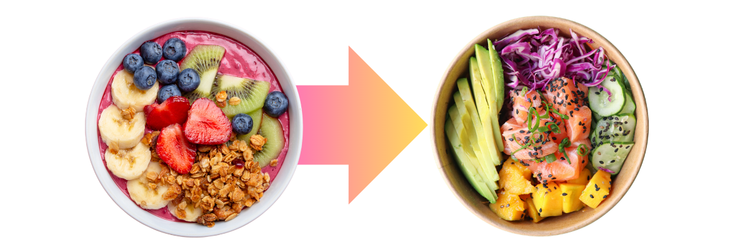
Fruit Smoothie Bowl vs. Salmon Breakfast Bowl
This is a great comparison because visually both bowls can look “healthy,” but metabolically they behave very differently.
Approximate macros below, based on average portions.
THE FRUIT SMOOTHIE BOWL
Whole fat milk, 1 cup
Frozen raspberries, approx. ½ cup
½ banana
5 blueberries
Kiwi slices, approx. ½ kiwi
Granola, approx. ¼ cup / 30g
Approximate macros:
Calories: 390–430
Protein: 11–13g
Carbs: 58–65g
Fibre: 8–10g
Fat: 13–17g
The main issue here is not that it’s “bad.” It’s that it is mostly carbs, with only a small amount of protein. For many women, especially if they are trying to stabilize energy, cravings, blood sugar, or weight, this may not hold them very long.
It can feel fresh and light — but it may leave them hungry again soon.
SALMON BREAKFAST BOWL
Salmon, 150g
¼ avocado
1 slice mango
Red cabbage, small sprinkle
Cucumber, about 5 slices
Approximate macros:
Calories: 360–420
Protein: 32–36g
Carbs: 8–14g
Fibre: 3–5g
Fat: 22–28g
This salmon bowl is much more stabilizing. It gives you a strong protein base, healthy fats, and a smaller amount of carbs from fruit and vegetables. This is the kind of meal that usually supports steadier energy, satiety, muscle maintenance, and fewer cravings later.
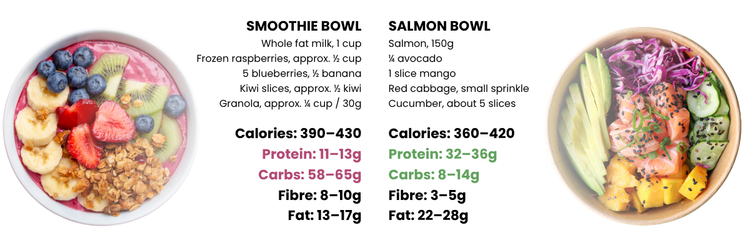
Comparing MACROS side by side.
Both bowls are made with beautiful whole foods.
But the smoothie bowl is more of a fruit-and-carb bowl with a little protein.
The salmon bowl is a protein-and-fat bowl with a little colour and fibre.
For your breakfast reset, I’d say it like this:
The goal is not to fear fruit or carbs. The goal is to understand what kind of breakfast actually holds your blood sugar (and emotions) steady.
The smoothie bowl may be fine after a workout, as a treat, or with added protein.
But if your goal is to feel steady, calm, full, and less snacky, the salmon bowl is the stronger breakfast choice.
FREE 3 HIGH PROTEIN BREAKFASTS DOWNLOAD
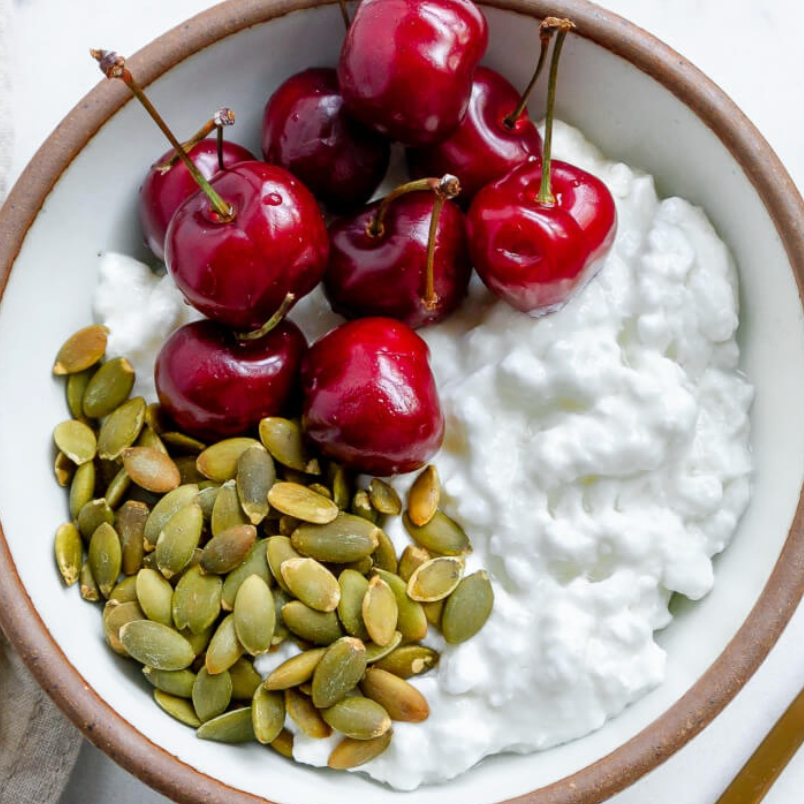
3 HIGH PROTEIN BREAKFASTS
Start from where you are and add these into your weekly rotation.
